
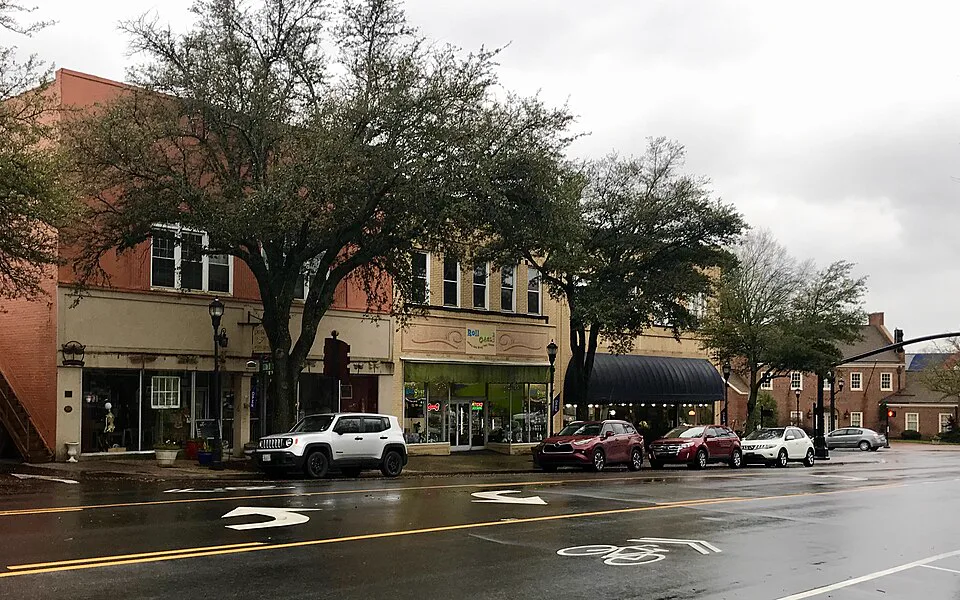

I see it all the time. Every week, driving through Cleveland County, I spot another Google Business Profile that's set up completely wrong. Not just a stale photo or hours off by twenty minutes. I mean the category - the single most powerful ranking lever in Google's entire local algorithm - is flat-out incorrect. For a complete overview of how every local SEO signal works together, see our Local SEO guide.
A Shelby auto shop lists its primary GBP category as "Car Dealer." A Kings Mountain plumber went with "General Contractor." A Forest City dentist is categorized as "Medical Clinic." Nobody did it on purpose. They picked whatever sounded close when they claimed their listing three years ago and never thought about it again.
And it's destroying their visibility. Not by a little. Completely. Their profile is invisible for the exact searches their customers type every single day.
The 2026 Whitespark Local Search Ranking Factors survey puts a number on something worth repeating: your primary GBP category is the single most powerful ranking signal in Google's entire local algorithm. It scored 227 out of a possible maximum.1 It beats proximity. It beats reviews. It beats backlinks. It beats everything. And most small businesses in this county have it wrong. I covered how all these ranking factors interact in our breakdown of the 2026 local search algorithm, but the category issue alone sinks more local profiles than anything else on the list.
- Primary category scored 227 - #1 overall - it beats proximity, reviews, and backlinks combined.
- Keywords in your business title scored 223 - your DBA can be a legitimate ranking signal.
- Secondary categories measurably improve rankings - add up to four covering every service you offer.
- Google supports nearly 4,000 categories - your exact one exists. Don't settle for the broad parent.
| Rank | Ranking factor | Score | Why it matters |
|---|---|---|---|
| 1 | Primary GBP category | 227 | The single most powerful lever in Google's local algorithm |
| 2 | Proximity of address to searcher | 225 | Physical location matters less than category in small towns |
| 3 | Keywords in GBP business title | 223 | Legal DBA with service keywords is a compliant workaround |
| 4 | Physical address in city of search | 213 | Being in the right city is non-negotiable for Map Pack entry |
| 5 | Open at time of search | 189 | Accurate hours are free to fix but frequently wrong |
Your category matters more than your address
Your primary GBP category scored 227 out of a possible maximum in Whitespark's 2026 Local Search Ranking Factors survey. That beats proximity at 225, keywords in your business title at 223, and physical address at 213. The dropdown you selected three years ago matters more than where your building sits.
Read that again. The dropdown you selected three years ago matters more than where your building sits. More than your review count. More than the backlinks you paid some agency to build. Even a website redesign won't fix this - Google looks at your category signal first.
Here's the full 2026 ranking, straight from the Whitespark survey:1
- Primary GBP category (227)
- Proximity of address to searcher (225)
- Keywords in GBP business title (223)
- Physical address in city of search (213)
- Open at time of search (189)
Not even close. Primary category leads the pack by a margin that tops physical proximity itself. And proximity gets relaxed constantly out here in Cleveland County. When the searcher is fifteen miles down Highway 74 and Google widens the radius, profile relevance becomes the tiebreaker.2 I wrote about exactly how this plays out in our guide to Google Maps ranking distance in small towns. The short version: your category IS your relevance signal. If it's wrong, Google ranks you for things you don't do.
Real-world example: one wrong dropdown cost a Shelby auto shop its Map Pack visibility
Take a mechanic on East Dixon Boulevard. Solid shop. Fifteen years in Shelby. Good reviews. Primary category set to "Car Dealer." He sells zero cars. He services them. But that one field pits him against actual dealerships with millions in inventory. For "auto repair Shelby NC" - the search his customers type when their AC dies in July - his profile barely surfaced.
One dropdown selection. That was the whole problem.
Key point: A wrong primary category makes your profile invisible for the searches your actual customers type every single day.
The primary GBP category selected by the business operator is the single most important local ranking factor across the entire algorithm, carrying an aggregate expert evaluation score of 227 out of a possible maximum.
Why keywords in your business name rank above everything else
Keywords in your Google Business Profile title scored 223 in Whitespark's 2026 survey - the third most powerful ranking factor in Google's local algorithm. That means the words in your business name carry nearly as much weight as your category selection. But Google bans keyword stuffing, so you need a compliant way to capture this signal.
Plenty of local business owners get frustrated watching competitors rank above them with names like "Kings Mountain Auto Repair - Towing & Brake Service." That's keyword stuffing. It's explicitly against Google's guidelines.4 But let's be honest: enforcement is rare in lower-density markets like Cleveland County.5 Google's systems flag obvious spam in big metros. They're far less aggressive in towns under 50,000.
I'm not telling you to break the rules. I'm telling you what your competitors are already doing.
There's one legitimate workaround: file a legal DBA with targeted keywords.2 If your business is registered as "Smith Automotive LLC" but your DBA is "Smith Automotive Repair & Service," that DBA is your legal business name - and you can list it on your GBP. Google accepts it. It's compliant. It gives you the keyword relevance signal without the spam risk. I explained how this plays out for businesses with non-public addresses in our guide to Google ranking for service area businesses with hidden addresses.
This also helps a suburban shop in Boiling Springs or Mooresboro cast a wider net. A legal DBA with "Cleveland County" or "Shelby" can anchor your relevance across the entire county map, not just the three-mile ring around your door.
Key point: A legal DBA with service keywords is your only compliant path to the ranking boost competitors get from keyword-stuffed names.
| Business Type | Wrong Category | Right Category | Visibility Impact |
|---|---|---|---|
| Auto Shop | Car Dealer | Auto Repair Shop | Invisible for "auto repair" searches; ranked against actual dealerships |
| Restaurant | Restaurant | Italian Restaurant / BBQ Restaurant / Steak House | Lost to competitors who specified cuisine type for niche searches |
| Plumber | General Contractor | Plumber | Missing from every "plumber near me" emergency search in your zip code |
| Dentist | Medical Clinic | Dentist / Cosmetic Dentist | Filtered out of dental-specific results entirely |
| Landscaper | Construction Company | Landscaper / Lawn Care Service | Showing up for commercial bids, not the residential jobs you actually want |
Look at the restaurant row. "Restaurant" isn't wrong - but it's not specific enough. Google now supports nearly 4,000 GBP categories.3 If you run a barbecue joint on South Lafayette Street, your primary category should be "Barbecue Restaurant," not "Restaurant." The generic one lumps you in with pizza spots, sushi bars, and diners. You lose relevance for "best BBQ Shelby NC" - the exact high-intent query that converts. The same logic applies across the board. Whether you invested in a restaurant website or run a service business, your category precision determines who finds you.
Secondary categories add extra ranking dimensions
Your primary category is your strongest ranking signal, but it is not the only one. Google lets you add up to four secondary categories that tell the algorithm about every service you offer. Each one adds a relevance dimension for a different set of search queries. Here is how to choose them and what the impact looks like in Cleveland County.
Primary category is the foundation. But BrightLocal's research shows that up to four targeted secondary categories measurably lift your Map Pack position.3 Each secondary category adds a relevance dimension. Each one gives Google another reason to surface your profile for adjacent searches.
Here's what that looks like for an auto repair shop in Shelby:
- Primary: Auto Repair Shop
- Secondary: Auto Radiator Repair Service
- Secondary: Brake Shop
- Secondary: Auto Air Conditioning Service
- Secondary: Tire Shop
Without those secondary categories, a search for "AC repair Shelby NC" sends the searcher to the chain shop that bothered to set theirs up right. Your shop might be better. Might be closer. But Google has no signal telling it you do AC work - so it doesn't surface you.
You can find profiles all over this county where the business offers five distinct services and the GBP has exactly one category: the generic one they picked during setup. Zero secondary categories. Every missing category is a search query that profile can't rank for. This takes ten minutes to fix. Here's the process:
- Search Google's full category list. Don't guess. Find the exact category that describes what you do. There are thousands. Yours exists.
- Set your primary to the most precise match. Not the broad parent. The specific one. "Barbecue Restaurant" over "Restaurant."
- Add up to four secondary categories covering every distinct service you offer. If you do it, list it.
- Check your business title. If your legal DBA includes target keywords and you can document it, use it. If not, don't stuff.
- Verify your address and hours. The #4 and #5 factors (213 and 189 respectively) are free to fix. Don't leave points on the table.1
The local algorithm ranks your profile right now, every day, for every search. The only question is whether your categories are telling the algorithm the truth about what you do. In most towns in this county, most of the time, they're not.
Frequently asked questions
How do I find the right GBP category for my business?
Search Google's full category list inside your Business Profile dashboard. Google supports nearly 4,000 categories. Do not settle for a broad parent category like "Restaurant" when "Barbecue Restaurant" exists. The more specific your primary category, the stronger your relevance signal for exact-match searches.
Can I change my primary GBP category without losing rankings?
Yes, but expect a 2-to-4-week volatility period while Google recalculates your relevance signals. The long-term benefit of a correct primary category far outweighs the temporary fluctuation. Test the change during a low-season period and monitor your Insights tab for shifts in search impressions.
How many secondary categories should I add to my GBP?
Add up to four secondary categories that cover every distinct service you offer. Each one adds a relevance dimension for a different set of searches. If you do auto repair, brakes, AC service, and tires, list all four as secondary categories. Leave none of your services unrepresented.
Is keyword stuffing in my business name still effective for local SEO?
It works in practice but violates Google's guidelines. Enforcement is inconsistent in small markets, but the risk of suspension exists. The compliant alternative is filing a legal DBA with target keywords and using that as your GBP business name.
Does my GBP category matter more than my reviews?
Yes. The primary category scored 227 in Whitespark's 2026 survey, making it the single most powerful local ranking factor. Reviews and review velocity rank lower in the overall algorithm. A wrong category makes your profile invisible even with perfect reviews.
Not sure if your GBP categories are correct?
We audit Google Business Profiles for local businesses across Cleveland County. In ten minutes we can spot the category problems silently costing you Map Pack visibility - and tell you exactly what to change. No charge for the audit.
Sources: 1. Whitespark, "2026 Local Search Ranking Factors." 2. Whitespark, "7 Local Search Ranking Factors That May Challenge Your Current Thinking." 3. BrightLocal, "Google Local Algorithm and Ranking Factors." 4. Digital Applied, "Local SEO Core Updates: GBP Strategy May 2026." 5. Outpace SEO, "Local SEO GBP Guide 2026."