
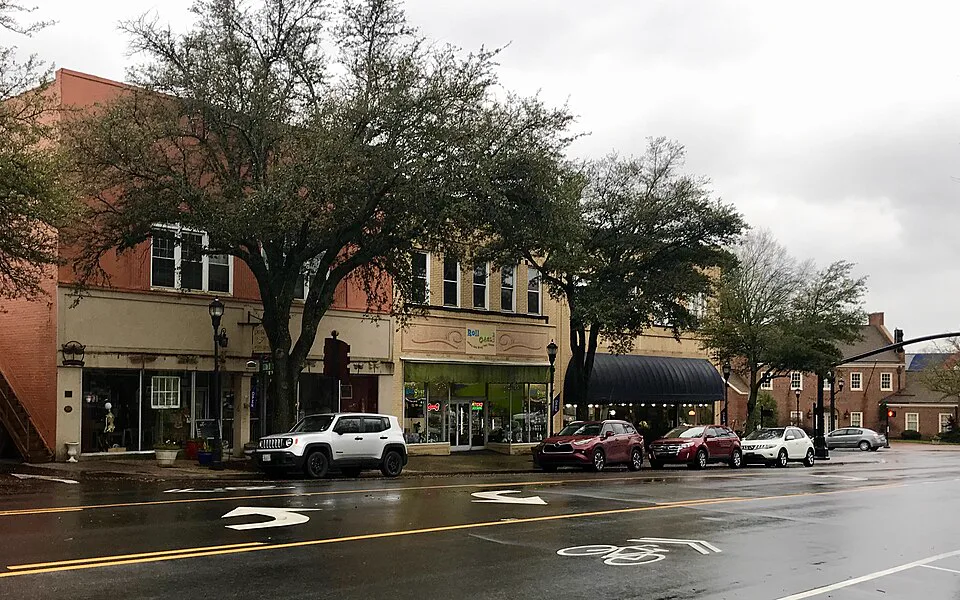
If you own a small business in Shelby, Kings Mountain, or anywhere across Cleveland County, your website is either generating revenue or leaking it. There's rarely an in-between. The pattern in the data is consistent: most owners don't know their website is underperforming until they see the numbers. By then, they've been losing customers for months or years.
This guide connects everything you need to know about small business web design and redesign in one place. Whether you're wondering if your current site is outdated, calculating whether a redesign would pay for itself, trying to figure out why mobile visitors leave in seconds, or deciding between a template and a custom build - the data and answers are here. Use this as your starting point, then dive into the specific articles for the full breakdown.
- 60% of small business websites are outdated - 30% actively hurt sales. Your site is statistically more likely broken than working.
- A website redesign lifts conversions 20-50% within 6 months - average payback period is 4-14 months. It's the highest-return marketing investment most small businesses never make.
- 53% of mobile visitors leave if your site takes over 3 seconds - 73% reject non-responsive sites entirely. Speed and mobile are revenue issues, not technical ones.
- Custom-built websites outperform templates in every metric - faster load times, better SEO, full ownership, and lower long-term cost. You own a custom site. You rent a template.
Is Your Website Costing You Customers?
The short answer: if your site hasn't been redesigned in the last two and a half years, almost certainly yes. Sixty percent of small business websites are running on outdated technology, and 30 percent are actively hurting sales.1 Broken layouts on mobile. Contact forms that stopped sending emails. Booking systems that nobody has tested since installation. These aren't edge cases. They're the majority.
We covered the full breakdown of what an outdated site actually costs in What an Outdated Small Business Website Is Actually Costing You. The headline numbers: 94% of consumers don't trust an outdated website, first impressions form in 50 milliseconds, and the average site lifespan before needing a redesign is just 2 years and 5 months. Food industry sites need a redesign every 14 months. Most Shelby restaurants haven't touched theirs since before COVID.
How do you know if your site has crossed the line from "a bit dated" to "actively losing you money"? There are three definitive signs. First: traffic is steady but the phone stopped ringing - your site is a leaky bucket. Second: your site looks five years older than your competitors - 94% of first impressions are design-driven, and yours is failing the 50-millisecond trust test. Third: you can't update your own site without calling a developer - your website has become an operational bottleneck. We go deep on each of these in 10 Signs Your Small Business Website Needs a Redesign in 2026.
If any of those three signs sounds familiar, your website is already costing you more than you think. The question is what to do about it - and that starts with understanding what a redesign can actually return.
Key point: 60% of small business sites are outdated, 30% are actively hurting sales, and the average lifespan before redesign is 2.4 years. If your site is older than that, you're not a rare case - you're the statistical majority. That doesn't make it safe. It makes you typical, and typical in this market means leaving money on the table.
Is a website redesign worth the cost?
For most small businesses, yes, and the payback is measured in months rather than years. The gain comes less from looking better than from converting the visitors you already get.
Every small business owner in Cleveland County eventually asks the same question: is a redesign worth what it costs? The data says yes - overwhelmingly. A properly executed website redesign delivers 20% to 50% more conversions within the first six months post-launch. The average payback period is 4 to 14 months. After that, every dollar of incremental revenue is pure return.2
Let me give you two real examples. A law firm entered a UX redesign with a homepage CTA conversion rate of 0%. Zero clicks. After the redesign, that rate hit 6.67%. The service section click-through doubled. And the redesign recovered 25% of users who had previously dropped off without taking any action. Same traffic. Same ad spend. Same law firm. The only thing that changed was the conversion architecture.3 A nonprofit redesigned around a single insight - donors landed on the donation page asking "What does my gift do right now?" The old site buried that answer three clicks deep. The new site put it on the donation form. Total donations jumped 55%.4
The ROI formula is straightforward: (Incremental Annual Revenue - Project Cost) / Project Cost x 100. For a local service business generating $30,000 per month through their website, a $12,000 redesign with a conservative 25% conversion lift pays for itself in under two months. First-year ROI: north of 650%. If that math doesn't make you stop and run your own numbers, nothing will. For the full formula, industry benchmarks, and five more case studies, read Website Redesign ROI for Small Business: The Real Numbers.
Key point: A redesign that fixes conversion architecture - CTAs, forms, mobile paths, load time - pays for itself in months. A redesign that only changes fonts and colors produces zero ROI. The difference is whether you're making a revenue decision or a decoration decision.
How much does page speed affect a small business site?
Enough to undo the rest of the build. A slow or broken-on-mobile site loses the visitor before design, copy or offer ever gets a turn.
You can build the most beautiful website ever designed, and it will fail if it loads slowly or breaks on a phone. Performance isn't a technical detail. It's the gate that every visitor has to pass through before they see anything you've built.
Fifty-three percent of mobile visitors will leave your site if it takes more than three seconds to load. At five seconds, bounce probability surges 90% relative to a one-second baseline. A one-second delay in your checkout flow increases cart abandonment by 7%.5 These aren't hypotheticals. They're the documented averages across millions of real sessions. In Page Speed Is Costing Your Business Money: The Exact Math, we break down the full bounce curve by load time, the three things that actually fix a slow site, and why Spectrum's fiber rollout in Cleveland County is making slow websites more obvious than ever.
The mobile side of the equation is just as urgent. Sixty-four percent of all Google searches happen on mobile devices. Seventy percent of local-intent searches - the ones that matter most for a Cleveland County business - are on smartphones. And 76% of "near me" searchers visit a corresponding business within 24 hours.6 That's the fastest search-to-action conversion window in Google's entire index. But 73% of users will reject your business entirely if your site isn't mobile-friendly.7 Responsive design alone cuts mobile bounce rates in half before you touch anything else. For the full breakdown on mobile behavior, Google's mobile-first indexing, and how broadband expansion in Cleveland County is raising the stakes, read Mobile Optimization for Local Search: What Small Businesses Miss.
Key point: Speed and mobile optimization aren't separate from your redesign project. They are the foundation. A redesign that ignores page speed is leaving 53% of mobile visitors on the table. A redesign that ignores mobile responsiveness loses 73% of users before they engage. Fix the foundation first, then build on top of it.
Is custom code better than Wix or Squarespace?
It depends on what you need to control. Builders are cheaper to start and fine for simple sites; custom code wins when speed, structure or ownership actually matter to the business.
One of the first questions any small business owner asks is: "Why shouldn't I just use Wix or Squarespace? It's cheaper and I can do it myself." It's a fair question. The answer comes down to what you actually own, how your site performs, and what it costs you over time.
A template site from a drag-and-drop builder looks fine on the surface. But under the hood, it's loaded with code you don't need, scripts you can't control, and performance limitations you can't fix. The median page on the web today weighs 2.3 megabytes and makes 87 HTTP requests. Template builders add their own layers of bloat on top of that. You get a site that loads in 5-8 seconds on mobile, ranks poorly because Google penalizes slow load times, and locks you into a monthly subscription fee that never ends. You don't own the site. You rent it, and the platform can change its terms, pricing, or feature set whenever it wants.
Custom-coded websites are the opposite. Built from scratch with only the code your site actually needs. Every image optimized. Every script intentional. Every line of HTML and CSS under your control. The result: load times under 1.5 seconds, full SEO control, complete design flexibility, and - most importantly - you own everything. No monthly platform fee. No lock-in. No risk of waking up to a terms-of-service change that breaks your business's primary marketing asset.
| Factor | Template (Wix / Squarespace) | Custom-Coded |
|---|---|---|
| Page speed | 5-8 seconds typical | Under 1.5 seconds |
| SEO control | Limited to what the platform allows | Full control: schema, structure, speed |
| Ownership | You rent it - monthly fee forever | You own it - no recurring platform fees |
| Design flexibility | Stuck inside template constraints | Anything is possible |
| Long-term cost | Increases every year | Decreases as asset compounds |
| Content updates | Limited to what the builder offers | CMS you can actually update |
At Studio O'Brien, every site we build is custom-coded from scratch. No templates. No page builders. No lock-in contracts. You own the code, the content, and the domain. The only recurring cost is hosting. That's it. Every redesign and migration we do starts from the same position: build it right, build it fast, and put the owner in control. If you're comparing options for your next site, this is the single most important distinction to understand. A template saves you time upfront. A custom build saves you money - and generates more revenue - every single year afterward.
What does a modern small business website need?
Fewer things than most owners are sold, done properly. After reviewing hundreds of sites across Cleveland County, the same handful of pieces are missing every time.
After reviewing hundreds of small business websites across Cleveland County and the surrounding area, the pattern is clear. Most sites are missing the same critical pieces. Here is the checklist I use when evaluating whether a site is working or not. If yours is missing more than two of these, you need a redesign - not a refresh.
1. Mobile-responsive design that loads in under 2.5 seconds
This is non-negotiable. Over half your traffic is mobile, and 53% of those visitors leave if the site takes more than 3 seconds. Google uses mobile-first indexing - if your mobile site is broken, your ranking suffers on every device. Your load time target should be under 2.5 seconds for mobile. Under 1.5 seconds if you want to outperform competitors.
2. Clear calls to action above the fold on every page
Seventy percent of small business websites lack a clear CTA. A phone number visible without scrolling. A tap-to-call button on mobile. A contact form with three fields, not fourteen. A "Book Now" or "Get a Quote" link that's impossible to miss. Every page on your site should answer one question: "What do I want the visitor to do next?"
3. Schema markup and structured data
Google uses structured data to understand what your business does, where you are, and what services you offer. Without schema markup, your site is fighting with one hand tied behind its back in search results. LocalBusiness schema, Service schema, FAQ schema, Review schema - these aren't optional extras for SEO. They're how Google connects your site to local search queries.
4. Real photography of your business, your team, your work
Stock photos tell visitors "this could be any business." Real photos tell them "this is the actual place, the actual people, the actual work." In a small market like Cleveland County, where trust and reputation carry disproportionate weight, real photography is one of the highest-ROI investments you can make on your website.
5. A content management system you can actually update
If you have to call a developer to change your hours, add a menu item, or update a service description, your website is an operational bottleneck. Every modern small business site needs a CMS that lets you or your staff make text changes, swap images, and post updates without touching code. The goal is to put you in control of your content and your developer in control of the architecture.
6. Trust signals embedded in the conversion path
Real Google reviews visible next to your CTA. Case study logos. Clear pricing or clear next-step language. In Cleveland County, where people do business with people they know, trust signals carry more weight than any headline. If a visitor has to search for proof that you're legitimate, you've already lost them.
7. Analytics and conversion tracking from day one
You cannot improve what you don't measure. Every site should launch with Google Analytics or a privacy-focused alternative, Google Search Console, and conversion tracking installed and verified. Know where your traffic comes from, what visitors do when they arrive, and where they drop off. Without this data, every redesign is a guess.
Key point: Run through this checklist on your current site. If you're missing more than two, you're leaving revenue on the floor. Each missing piece compounds with the others - a slow site that also has no CTA and no schema markup isn't just 3 individual problems. It's a site that's invisible to Google and unconvincing to visitors at the same time.
Frequently asked questions
How often should a small business redesign its website?
The average website needs a full redesign every 2 years and 5 months. Food industry sites need it every 14 months; beauty every 19 months; construction can stretch to 5 years. If your site is older than your industry average, you are overdue. Most small business sites in Cleveland County haven't been touched since before COVID.
What is the ROI of a small business website redesign?
A well-executed redesign delivers 20-50% conversion lift within six months, with first-year ROI typically ranging from 200% to 789%. Average payback period is 4-14 months. A $12,000 redesign for a business generating $30,000 per month online with a 25% conversion lift pays for itself in under two months.
Should I use a template like Wix or Squarespace for my small business website?
Templates save you time upfront but cost you more in the long run through slower performance, limited SEO control, monthly platform fees, and design constraints you cannot escape. Custom-coded websites load faster, rank higher, give you full ownership, and eliminate recurring platform fees. A template is renting. A custom build is owning.
How much does a custom small business website cost?
Custom small business websites from a professional web developer range from $3,000 to $15,000 depending on page count, functionality requirements, and complexity. Most service businesses in Shelby and Cleveland County invest between $3,500 and $8,000 for a fully custom, mobile-responsive, SEO-optimized site. The site pays for itself through increased conversions within the first year.
Will a website redesign hurt my Google rankings?
No - a redesign done correctly improves rankings. Preserve URL structures, maintain heading hierarchy, set up 301 redirects for any changed URLs, and keep your Google Business Profile updated during the transition. A site that loads faster and works better on mobile consistently ranks higher after migration. The only rankings that drop are the ones that deserved to drop because the old site performed poorly.
Deep dives in this cluster
Each of these takes one decision from this guide and expands it with sourced 2026 data:
- How to choose a web design company - the hiring models, real costs, and the five questions that expose a bad fit.
- Who actually owns your website - domain, source code, and the vendor lock-in traps to avoid.
- Website builder vs custom: the real 5-year cost - the honest numbers on Wix and Squarespace versus a custom build.
- Why Wix and Squarespace limit your SEO - the schema, URL, and page-count ceilings that hold back rankings.
- What a small business website really costs in 2026 - pricing by build type plus the costs nobody quotes.
- Why cheap websites cost more - how technical debt turns a bargain build into an expensive rebuild.
Ready to Build a Website That Actually Works?
We build custom-coded, mobile-responsive, conversion-focused websites for small businesses in Shelby, Kings Mountain, Forest City, and across Cleveland County. Every project starts with the data - no templates, no lock-in, no redesigns that just change the paint. You own everything. Let's talk about what your site needs.
Sources: 1. Network Solutions, "Small Business Website Statistics," 2026. 2. Utsubo, "Website Redesign ROI: How to Measure and Justify the Investment." 3. Adriano Junior, "Website Redesign UX Case Study: Law Firm." 4. TechArk, "Nonprofit Website Redesign Increases Donations." 5. Digital Applied, "Page Speed Statistics 2026: Revenue Impact Research." 6. BizIQ, "Local Search Statistics 2026." 7. WP Rocket, Mobile Web Design Statistics.